What is bovine TB?
Bovine tuberculosis (bTB) is an infectious disease of cattle.
It is caused by the bacterium Mycobacterium bovis (M. bovis), which can also infect and cause TB in badgers, deer, goats, pigs, camelids (llamas and alpacas), dogs and cats, as well as many other mammals.
This disease is one of the biggest challenges facing the cattle farming industry today, particularly in the West and South West of England.
How does bovine TB affect me?
This disease situation has the potential to affect everyone, from those living in rural areas seeing the impact on farming neighbours first-hand, to people who enjoy great British beef and dairy products and want to see a thriving sector.
Everyone will be paying for the costs of TB via the public purse, with costs set to rise to £1billion in the next ten years unless action is taken.
There is also the potential for TB to spill over into other species. While there are still very few cases of TB found in dogs, it is on the increase in other animals, and particularly in alpacas.
Unless TB is reduced in the environment it is likely that these cases will continue to increase as the disease is forced to find new hosts.
What is the current situation?
The disease is spreading out of control.
There are now areas where the incidence of TB in cattle is persistent and high; these are called 'hotspots'. These are mostly centred in the South West and the West Midlands. However, as the disease is spreading there are more and more hotspots in places such as Cheshire, and increased areas across the East Midlands.
There has been a four-fold increase in the number of cattle slaughtered because of TB in the last 17 years. According to Animal Health statistics, in 1998 there were 6,000 cows slaughtered due to bTB in England. By 2012 this had risen to 28,284 cattle killed. The number of cattle culled in England due to TB between January 2010 and the end of 2012 was 79,365.

How has this happened?
TB in humans became a significant problem in Victorian England as industrialisation crowded people together in insanitary conditions in large cities.
At this time, many of the dairy herds that were kept in and around the cities to provide fresh milk became infected with bovine tuberculosis (bTB). The milk was a potent source of infection and many people died.
A law was passed making it illegal to sell tuberculosis milk and the tuberculin test, which could identify infected cattle before they showed symptoms, was developed. It was seen to have the potential to eradicate the disease and so the Attested Herd Scheme was introduced in 1935.
By 1950, herds that tested positive for the disease were compulsory slaughtered. This scheme involved regular compulsory testing of all cattle herds and the slaughter of bTB reactors, just as happens today.
It was at the NFU Conference in 1958 that the government announced, wrongly, that TB had been eradicated.
By the mid-1970s, all cattle herds in the UK were thought to have been cleared of bovine TB. However farmers in two areas, Cornwall and Gloucestershire, continued to see individual cattle test positive, despite having their herds cleared of the disease.
It is believed badgers harboured a reservoir of the disease and had begun to re-infect herds in those areas.
This situation continued at a low level throughout the 1970s. Unfortunately during the 1980s the number of cases started to rise again. This increase in number and geographical area has continued ever since so that bTB in cattle is once again widespread in England and Wales.
What impact does TB have on a farmer?
In 2009 the Farm Crisis Network conducted interviews and found that ‘dealing with bTB causes considerable stress to both farmers and their families’.
Some 20% of those interviewed admitted that they were either 'panicked' or 'devastated' by the news of a new outbreak, and a further 50% were 'upset' or 'worried'. Farmers told the FCN:
"The worst thing was that cows very close to calving had to be shot on farm. We could see the calves kicking inside as they died."
“I feel there is a constant dark cloud of uncertainty over me, causing stress, anxiety and fear. I feel weary, mentally and physically which results in pain in my body.”
“Financially it is very stressful. Cash flow is a huge problem. Having to keep animals when I would normally sell them puts more pressure on me, on my family, animal accommodation and feed costs. I don’t know how long we can keep going.”
The study found that many farmers were suffering financial impacts to their businesses, including a reduction in sales of beef and milk as a result of culled animals, increased labour and extra costs of feed and bedding, as they had to keep animals for longer.
Some farmers have become so weary and frustrated by repeated bTB outbreaks that they have decided to go out of beef or dairy production altogether.
TB Free England video: Mervin's story
What are farmers doing to limit bovine TB?
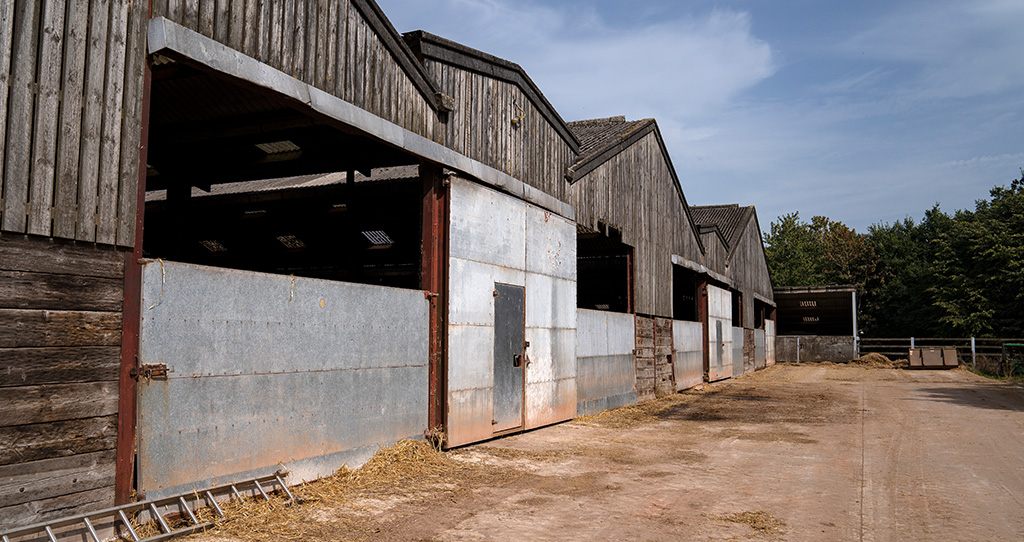
It is very difficult for a farmer to prevent a wild animal from coming into contact with his livestock either in the cattle sheds or out in a field, but farmers are working hard to prevent potential disease transmission.
 |
| Repairs to a door to keep badgers out |
 |
| Work to fencing to deter badgers |
 |
| Badger-proof gate |
 |
| Drinking trough raised and wall-mounted |
 |
| Badger-proof feed store (open) |
The measures that farmers take include raising feed and water troughs off the ground, ensuring doors to feed sheds fit well, and are kept shut at night, storing feed in covered bins and fencing off badger setts and latrines.
The only way of totally preventing infection would be to house cattle day and night, for 12 months of the year in secure premises and to sterilise all feed brought in.
The NFU, together with Defra, the Welsh Assembly Government and Food Environment and Research Agency (FERA), has developed a Bovine TB and Badgers - Improving Farm Biosecurity DVD which is being used to promote best practice.
Farmers also have access to independent advice from the South West TB Farm Advisory Service and through various events run by veterinary groups.
How is bovine TB spread?
Bovine TB is spread from cattle to badgers and badgers to cattle.
This is known as the cycle of reinfection.
The links between badgers, cattle and TB infection were first suspected in the early 1970s and both experience and experimentation has subsequently proved them beyond doubt. Professor Sir John Krebs concluded in his 1997 report that there was “compelling evidence” that badgers transmit bTB to cattle.
In addition, both the Zuckerman and Dunnet reports to government came to the conclusion that the badger is the most important wildlife reservoir and it is involved in the maintenance and transmission of the disease to cattle.
The programme of trials that followed the Krebs report were based on such a link and were designed to identify the most effective strategy for preventing bTB in badgers spreading into cattle populations.
Cattle movements are also part of the problem and have been linked to taking the disease to previously TB-free areas. However, evidence shows that, providing the wildlife is not also harbouring the disease, this doesn’t lead to a long-term TB problem. For example, Northumberland has had pockets of TB caused by cattle movements, but the level of infection has now dropped -as there is no substantial wildlife reservoir of the disease in this area.
The vast majority of bTB outbreaks occur in the 'hotspot' bTB areas of the South West and the West Midlands, and in these high-risk areas up to 50% can be attributed to localised transmission involving infected badgers.
How does TB move between badgers and cattle?
A badger with TB can infect cattle in several ways.
The primary route is inhalation, with cattle breathing in the bacteria from the air.
However, infection from cows eating contaminated material is also an important route.
Clinical sampling of live badgers has shown that bTB bacteria can be isolated from sputum, faeces, urine, bite wounds and draining abscesses. Badger latrine sites, where badgers urinate or defecate in fields, can contaminate grass with bacteria, which can then be transmitted to the cows when they graze.
Similarly, badgers mark their territory by urinating and this is often spread across cattle pastures.
If a badger has TB infection in its kidneys it will excrete a very high level of TB bacteria on to the grass. If an infected badger eats or drinks from cattle feed or water troughs, they can spread TB bacteria through their saliva, which infects the cows when they eat or drink from these contaminated sources.
Infected badgers can also spread the bacteria through open cuts and wounds.
There is also the potential for direct transmission of bacteria through nose-to-nose contact between badgers and cattle.
This can occur when badgers visit farm yards and there is substantial evidence to show close contact in farm buildings as well as regular visits from badgers to cattle feed stores.
- Watch - NFU, Defra, Fera, Nadis and Welsh Assembly, Bovine TB and Biosecurity. Video 3. Biosecurity at pasture.
- Read more - Tolhurst, B. A.; Delahay, R. J.; Walker, N. J.; Ward, A. I.; Roper, T. J. Behaviour of badgers (Meles meles) in farm buildings: opportunities for the transmission of Mycobacterium bovis to cattle? Applied Animal Behaviour Science 2009 Vol. 117 No. 1/2 pp. 103-113
- Read more - Garnett, B.T. Delahay, R.J. Roper, T.J. Use of cattle farm resources by badgers and risk of bovine tuberculosis transmission to cattle.
How does TB affect cattle?
The stringent testing regime, and removal of cattle for compulsory slaughter if they test positive for TB, means that on-farm welfare implications for cows with TB are kept to a minimum.
However the number of cows being culled because of bovine TB has increased four-fold in the past 17 years and has resulted in 100,000s of cows being killed before the end of their productive life. In England alone in the past five years we have seen the number of cattle culled due to TB rise to 138,750 (Jan 2008 – Feb 2013).
TB Free England video: The calf
How does TB affect badgers?
The major cause of badger deaths, 50,000 each year according to the Badger Trust, is road accidents.
However, in the hotspot areas, up to one in three badgers are estimated to have bovine TB (source: Independent Scientific Group on Cattle TB).
Badgers spend most of their life below ground sharing the same air space, tunnels and chambers, which provides the perfect environment for the disease to spread within a social group.
As in cattle, the disease affects the lungs - but also the kidneys. Infected badgers experience more extensive development of TB lesions than cattle, and infected animals will lose weight and body condition and experience severe breathing problems which limit their ability to forage normally.
However, it has been shown that badgers can go through a period of 'latency' when the disease is present but makes little progress and it is their ability to live with the disease and to pass it on readily within the confines of their setts to other badgers and to cattle at pasture and around farm buildings that makes the badger an almost perfect host for bTB.
How many badgers are infected?
In 2007, as part of its final report on the Randomised Badger Culling Trials, the Independent Scientific Group on Cattle TB reported a 40% infection rate among badgers in the hotspot areas where the RBCT ran.
The Badger Trust and anti-badger cull groups currently quote the ISG as saying there was a 16% TB infection rate in badgers. However, this figure is based on initial post-mortems, rather than the final full post-mortem examinations.
The latter examinations did indeed find that 40% of the 1,600 badgers culled had visible TB lesions.
Is the badger an endangered species?
No. Badgers first became protected in 1973 following the introduction of the Badger Act.
Badgers are protected not because they are in any way rare or endangered, but because of illegal badger baiting, which involves digging out setts and using dogs.
Subsequent laws have been introduced, such as the Wildlife and Countryside Act 1981, and have culminated in the Protection of Badgers Act 1992, protecting the sett as well as the badger.
If badgers have TB, why is the population rising?
Bovine TB is a chronic, wasting infection.
Animals (and humans) can suffer from it for many years before succumbing.
The nature of this disease is such that if it reaches the stages of chronic infection it will cause a debilitating and painful death to those animals that succumb to it.
However, it has been shown that badgers can go through a period of 'latency' when the disease is present but makes little progress. It is this ability to live with bovine TB and to pass it on within the confines of their setts, and to cattle at pasture and around farm buildings, that makes the badger an almost perfect host for bTB.
How much does bTB cost?
Nearly 25,000 cattle were slaughtered in England alone in 2010/11, at a cost to the taxpayer of £91 million.
It has cost the tax payer £500 million to control the disease in England in the last 10 years. It is estimated that the costs of bovine TB control will top £1 billion over the next decade, if no action is taken.
How do farmers pay for bovine TB?
Farmers do pay, they pay a significant amount.
First of all they pay for the cattle control measures. Farmers in endemic areas routinely test their cattle every year, and in a breakdown situation (when bTB is confirmed in a herd) they are testing every 60 days. Even for those without TB in their herds, pre-movement testing is required before any animal can be moved off farm.
Testing requires additional labour and causes significant stress, often leading to injuries to both stock and those people handling them, but also results in loss of income because cows don’t milk as well and beef animals don’t put on as much weight.
It is widely recognised that the stress of handling can make animals more susceptible to other conditions and even cause pregnant cows to abort.
Government figures (see section 1.3) suggest that every time a farmer has a breakdown in the herd it will cost an average of £30,000, although this figure can vary enormously from farm-to-farm. Of that, around £10,000 falls upon the farm business itself.
An interim report published by the University of Exeter, looked at the costs of bTB breakdowns on eight case study farms from the South West of England.
One of the dairy farms used in the study, which lost 61 cows to bTB, estimated that the loss of these animals alone cost their farm £56,364 in milk sales. Consequential losses such as these are not recoverable by the affected farm business under the compensation scheme.
In addition, the money paid for animals which are slaughtered does not always truly reflect the value, particularly of breeding stock.
Herd restrictions put on trading animals after a breakdown can also be very expensive. Some farmers cannot sell animals and become overstocked, others cannot buy replacement stock to maintain their business and both situations can lead to big cash flow problems.
In addition, looking at the purely financial costs disregards the enormous emotional damage bTB does to farming families.
How can the spread of bovine TB be reduced?
The evidence shows that TB can be tackled successfully when all fronts of the disease are tackled at the same time.
This means using both cattle controls and badger controls in the hotspot areas; those areas where the disease is persistent and high.
Cattle herds in TB problem areas, and surrounding areas, are tested annually and cows that react to the test are put into isolation and slaughtered.
The remainder of the herd is subject to strict movement restrictions, meaning cows cannot move off farm, unless it is for slaughter, until the whole herd passes two consecutive TB tests over 120 days.
Despite the measures, the number of farms closed down with bovine TB is rising.
The number of cattle herds in England which were under restrictions because of a TB incident, at some time during the period January-November 2012, was 6,587. This is having a devastating impact on the British beef and dairy sectors.
Currently, TB infected badgers are not identified, treated or slaughtered, allowing the disease to build in this wildlife reservoir. It has developed to the extent that they can excrete vast numbers of bTB bacilli in their dung, urine and saliva which can then be ingested by cows.
As the evidence demonstrates that badgers do spread TB to cattle, and harbour a reservoir of this disease within the wildlife, it is important the government includes badger controls in its TB Eradication Plan.
This means that badgers will be culled in those hotspot areas where TB infection is persistent and high, to stop further spread.
The badger cull is not happening nationwide; there is no nationwide culling strategy.
Instead the cull will be licensed by Natural England and will begin with two pilot areas, to ensure that the method of controlled shooting is safe, effective and humane.
Once the pilots have been carried out successfully the policy will be extended to other hotspot areas in the South West, West Midlands and some parts of the East Midlands.
What is the government doing about bovine TB?
The government has committed to controlling TB in wildlife in its The Coalition: Our Programme for Government document.
It says: "As part of a package of measures, we will introduce a carefully managed and science-led policy of badger control in areas with high and persistent levels of bovine tuberculosis”.
In September 2010, a consultation was launched. That ended in December 2010, and on July 19 the following year ministers announced they were minded to introduce a science-led package which will include badger controls.
A subsequent consultation on delivering that package ended on September 19 and the results were announced in April 2012. This saw the TB Eradication Policy, and the inclusion of badger controls, agreed.
The policy has since withstood two legal challenges - one at the High Court and a second at the Court of Appeal – on the method of the cull, namely controlled shooting.
As another part of the TB eradication plan, the autumn of 2012 saw Defra announce tougher cattle controls.
A badger cull will be subject to results from two pilot projects, in West Somerset and West Gloucestershire, which are likely to run from June 2013, to ensure such a cull is safe, effective and humane.
The pilots had initially been planned to take place in summer 2012, but was postponed for a variety of reasons, not least a survey which revealed higher than anticipated badger numbers in the two areas.
Where is the evidence that says the plan will work
The government’s TB Eradication Plan, and the decision of successive farming ministers to include badger controls, is based on scientific experience from the Randomised Badger Culling Trial (1998-2007).
It demonstrated four keys areas which need to be achieved to ensure the badger culls are carried out safely, humanely and effectively.
Controls need to cover a large enough area in order to reduce disease so the current Government TB Eradication plan has said that no area under 150KM² will be included. The most recent follow-up work published by members of the ISG (Independent Science Group) from the RBCT has shown that the size of area needed for an effective cull is not as large as initially thought and that the benefits can be sustained for a number of years after the cull has taken place.
- The RBCT said that bovine TB could increase outside of the cull area as badgers leave it, taking the disease with them. This is called the perturbation effect. So the current Government TB Eradication plan has focused on using hard boundaries such a major roads, rivers and coast lines to ensure perturbation is kept to an absolute minimum.
- The report authors called for strict conditions to deliver an effective cull. The two pilot areas are being licensed by Natural England under the Badger Act for the purpose of disease control. The licences will be approved only once the licence criterion has been met by those applying for a licence. UPDATE: Natural England has now issued licences.
- The report questioned the cost-effectiveness of a cull and so the farming industry is working with Defra, Natural England and professional contractors to deliver the cull from the grassroots, using local knowledge and local networks. An industry led, funded and delivered method will save money.
I keep hearing about the 'RBCT' What is it?
The Randomised Badger Culling Trial, or RBCT, is a large-scale field trial that was set up to quantify the impact of culling badgers on incidence of TB in cattle, and to determine the effectiveness of strategies to reduce the risk of a TB cattle herd breakdown.
The RBCT represents nearly ten years of work (1998-2007) and nearly £50 million of taxpayers' money. It was started after the Krebs Review on Bovine TB in Cattle and Badgers which reported in 1997. It concluded that despite there being 'compelling' evidence that badgers were involved in transmitting infection to cattle, the development of a control policy was made difficult because the effectiveness of badger culling could not be quantified with the data available.
It therefore recommended that a large-scale field trial - the Randomised Badger Culling Trial, or RBCT - be set up to quantify the impact of culling badgers on incidence of TB in cattle, and to determine the effectiveness of strategies to reduce the risk of a TB cattle herd breakdown.
The results of this robust experimental trial are fully published and peer-reviewed and represent the most substantial and coherent evidence base for the evaluation of badger culling.
How did it work?
The trial was conducted in thirty 100km2 areas of South West and central England, each located in a high-risk area for cattle TB.
The 30 areas were grouped into ten sets of three, each called a triplet.
Within each triplet, one area was subjected to repeated (approximately annual) culling across all accessible/consent land (proactive culling). In another area the badgers were culled on a single occasion locally, on and near farmland where recent outbreaks of TB had occurred in cattle (reactive culling).
The remaining area received no culling (survey only) and acted as an experimental control with which the culling areas could be compared. Participating farmers were aware of the treatment being applied to their area (i.e. they were not blinded).
Results showed that from one year after the last proactive cull to 25 February 2011, incidence of confirmed breakdowns in proactive culling areas was 16% lower than in survey-only areas.

Will a badger cull really help to reduce TB in cows?
Yes. The latest figures derived by experts from the RBCT demonstrate that five years after culling ceased, the rate of infection of herds in the area decreased by 16%.
This work has also shown that the effects of perturbation seen in the initial analysis of the RBCT have significantly reduced, and also that the incidence of bTB in herds surrounding the area of a cull have remained the same.
Is a 16% reduction in cattle TB worth it?
Yes. The figure of 16% is the one used by the government because it is the only verified scientific figure, obtained from the RBCT.
There are a number of reasons why this figure is likely to be very pessimistic. The RBCT concluded that culling should take place on an area of at least 150km2, whereas the trials where done over an area of 100km.
Moreover the trial areas were circles without hard boundaries. And there is plenty of evidence that the culling was not done effectively or systematically enough, and was totally suspended in 2001 during the Foot and Mouth crisis. But even if the 16% figure is correct this would mean 47 fewer farms would succumb to the disease within the trial area.
The alternative to a cull would either be to do nothing and wait, quite possibly for ten years, for another solution, by which time the incidence of the disease would be even more severe and take even longer to control, or to vaccinate badgers.
This would be very ineffective and costly and there is absolutely no research data to indicate what the effect on the incidence in cattle would be.
Culling 70% of the badgers seems unnecessary?
The requirement to cull 70% of badgers in a control area was established by independent scientists following results from the RBCT. These results showed that on average across the 10 trial areas if you removed 70% of badgers there would be a significant impact on disease reduction in cattle.
The UK is a signatory to the Bern Convention of the Council of Europe which prohibits the local extinction of endangered or protected species. The Standing Committee of the Convention is satisfied that the planned control in England does not breach the terms of the Convention.
Would only infected badgers be culled?
Unfortunately not. There is no simple way to determine whether a badger has TB.
The only reliable method is by post-mortem examination. Failing that, as with cattle, by two tests separated by a number of days, which is completely impractical.
That said, culling would only take place in areas of high TB incidence in badgers so a large proportion of the population would be infected.
Has this approach been tried elsewhere?
The UK coalition government has decided on this multi-faceted approach because the science shows it will work.
In addition, there is evidence from other countries which have significantly reduced TB by tackling all aspects of the infection cycle.
For example, the Irish Government has been conducting a badger control programme for the past 13 years. The number of cows testing positive to the TB test has fallen by a third during the past three years.
In 2008 Ireland had just under 30,000 reactor cattle, in 2009 they had just under 24,000 and in 2010 they had just over 20,000 reactor cattle. By 2012, the figure had fallen to 18,476.

What about vaccinating cattle - or badgers?
Vaccination will be an important tool to help control bovine TB in the future.
But the evidence suggests it will not work on its own – and where both cattle and badgers are concerned, a realistic programme remains a number of years away.
Vaccination won’t work on an animal that already has bovine TB, and no country in the world where wildlife carries the disease has eradicated it in cattle without tackling it in wildlife too.
Vaccination and cows
There are calls for cows to be vaccinated against bTB.
However there is no legal vaccine available. Currently the only option is the BCG vaccine (Mycobacterium bovis Bacille Calmette-Guérin – ref 1,2,3,4,5).
The problem is that at present it is impossible to distinguish between a BCG-vaccinated and TB-infected cow. And for this reason it is currently illegal under EU law to vaccinate cattle with the BCG jab.
Work is underway to devise a DIVA test (ref 6,7,8) - a test that can Differentiate between Infected and Vaccinated Animals. But even when this has been fully developed, it will need to go through EU and international approval.
The upshot is that most estimates say it will be ten years before vaccinating cattle is a realistic possibility (9).
On top of that, there's evidence to suggest that the BCG vaccine and DIVA test will not eradicate bovine TB on their own. A recent scientific study (10) concluded that the efficacy of the BCG vaccine in cattle was between 56% and 68%.
We know the BCG vaccination reduces the progression, severity and excretion of TB, resulting in reduced transmission between animals, but it is not perfect. And for any vaccine to eradicate a disease it is necessary to ensure that 80% of the target population are immunised. The current BCG vaccine just does not does not shape up.
Scientists have said that vaccination has to be used in combination with other measures, which must include dealing with the disease in badgers. You can read more about bovine TB and vaccination on the Defra site, here.
Why isn’t a vaccine being used to protect badgers?
Most voices in the debate, including the NFU, fully support the development of vaccines for badgers.
However, the only vaccine available is an injectable form – and that presents problems.
You need to cage-trap the badgers to vaccinate them. And you have to it annually for period of at least five years.
The process is costly and needs to be carried out by people who have been on accredited courses. Every trap will have to be visited early in the morning, every day.
The Welsh Assembly has just completed its first year vaccinating badgers in the Pembrokeshire hotspot area. Costs per badger are likely to run to £662 per year for five years – a total of £3,310 per badger (11).
And here too, there are still question marks over the efficacy of the vaccine.
It will not cure a sick badger, one which is already infected with TB.
The science suggests the vaccine is most effective in very young animals, and less so in older subjects (12). Young badgers spend their early weeks in the sett, making it impossible to trap and vaccinate them and putting them at risk of infection before they emerge.
There is also no evidence as yet which shows that vaccinating a proportion of the badger population actually results in a reduced risk to cattle.
An oral bait vaccine is likely to offer the most successful route forwards. But this option is still some years away from becoming a part of any badger control plan, because there is no licensed or proven oral vaccine currently available.
- Read more – A comprehensive range of references for this article can be found here.
What is the current situation with TB in Wales?
Decisions relating to bovine TB sit within the Welsh government natural resources minister's portfolio.
On 20 March 2012, the Welsh Government announced a five-year badger vaccination programme in North Pembrokeshire. In the first year of the project 1,424 badgers have been vaccinated at a total cost of around £943,000, or approximately £662 per jab.
The badgers will require an annual booster vaccination. This could mean that over the five-year period of the programme, vaccination will cost in excess of £3,000 per vaccinated badger.
The Welsh government has not been able to determine the proportion of the population of badgers in the area that have been vaccinated.
Welsh farmers adhere to strict cattle controls. Measures include annual testing and pre-movement testing across the whole of Wales, stringent rules for restricted herds with regards to buying in replacements to make up for lost animals and even tighter testing for herds neighbouring a bovine TB breakdown.
Some 9,307 cows were culled in Wales in 2012 – an increase of 15% on 2011. More than 48,000 cattle have been compulsorily slaughtered in Wales because of bovine TB in the last five years.
Click here to see the latest TB statistics for Wales and England.